Finding the part: aliases, numbers and model mapping
We set up each part with its primary code plus unlimited aliases — OEM number, brand number, competitor number, local trade name — so the counter finds the item whichever way the customer describes it.
Vehicle make, model and variant are held as item attributes or groups, so a search can be narrowed to what fits a particular vehicle instead of returning every similar-looking part.
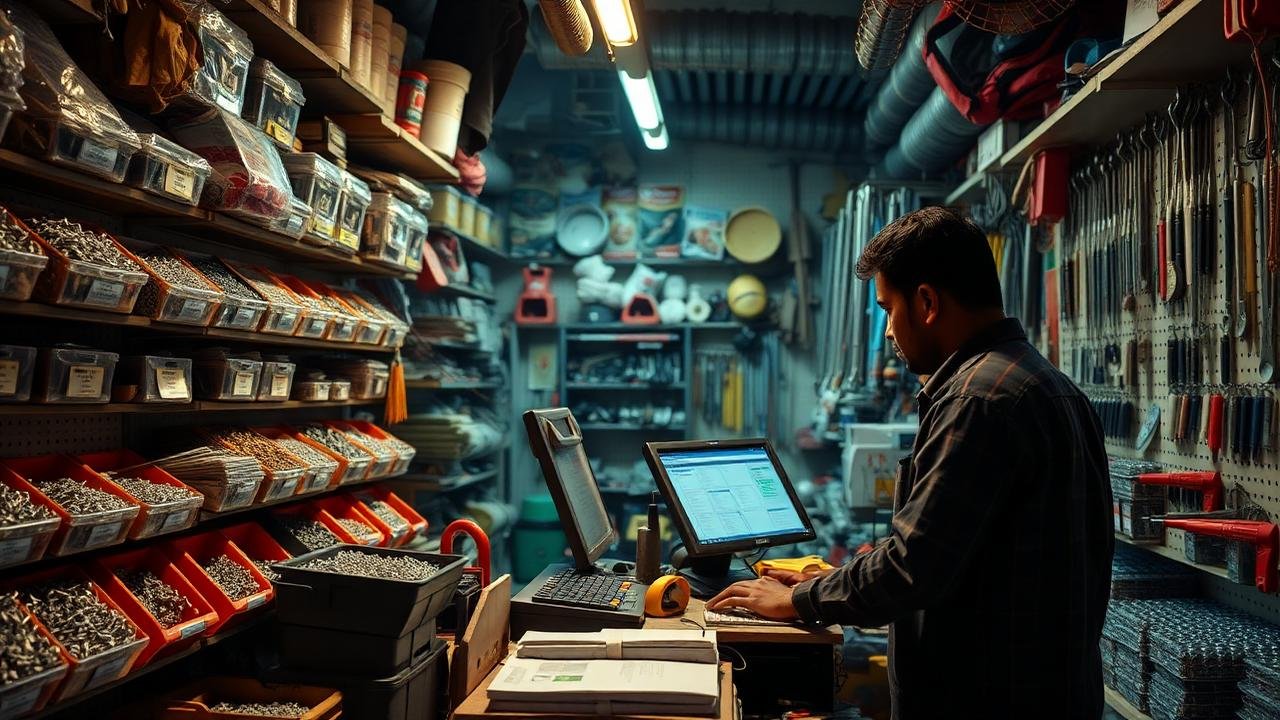
Rack and bin location prints on the pick slip, which is the difference between a two-minute counter transaction and a five-minute hunt in the loft.
- Unlimited aliases per part including OEM and brand numbers
- Vehicle make, model and variant mapping
- Rack, bin and shelf location on screen and pick slip
- Barcode support for fast-moving lines
- OEM, genuine and aftermarket segregation with separate margins
Pricing: MRP, discount and garage rates
Auto parts pricing is layered: MRP for the walk-in customer, a discount slab for a garage, a different one for a fleet, and brand-wise schemes on top.
Busy holds MRP per item and per batch where stock has arrived at different printed prices, and applies party-wise or group-wise discount automatically so the counter operator does not negotiate on your behalf.
Minimum-margin validation and rate-change reporting keep control when several people can bill.
Garage and mechanic credit
Garages are your best customers and your largest credit risk, because their own recovery is slow. Busy applies credit limit and credit days per party with a warning or block at billing, and tracks bill-by-bill outstanding rather than a lump-sum balance.
Ageing, PDC tracking, interest where your terms permit, and automated WhatsApp or email reminders turn recovery into a routine. Mechanic commission or incentive, where you pay it, can be tracked against the parties introduced.
- Credit limit and days per garage with warn or block
- Bill-by-bill ageing and top-overdue list
- PDC and cheque bounce register
- Mechanic or referrer incentive tracking
Warranty, returns and defective parts
Parts come back — some defective under warranty, some simply wrong for the vehicle. Busy records serial or batch where applicable, so a warranty return can be verified against the original sale date and price.
Defective returns to the supplier are tracked as a claim with pending status, and defective stock is held in a separate godown so it is never billed again by mistake.
Return-to-supplier ageing tells you which distributor is sitting on your claims, which is money most parts businesses never chase systematically.
Stock: thousands of slow lines and a few fast ones
A parts business carries a long tail: most lines sell a handful a year, a few sell daily, and the tail is where capital sits. Busy's slow-moving and dead-stock analysis, cut by brand and vehicle model, tells you which part of the tail is genuinely necessary service coverage and which is a buying mistake.
Reorder levels are set for the fast lines and shortage reports drive ordering by supplier. Physical verification is set up rack by rack so counting actually happens.
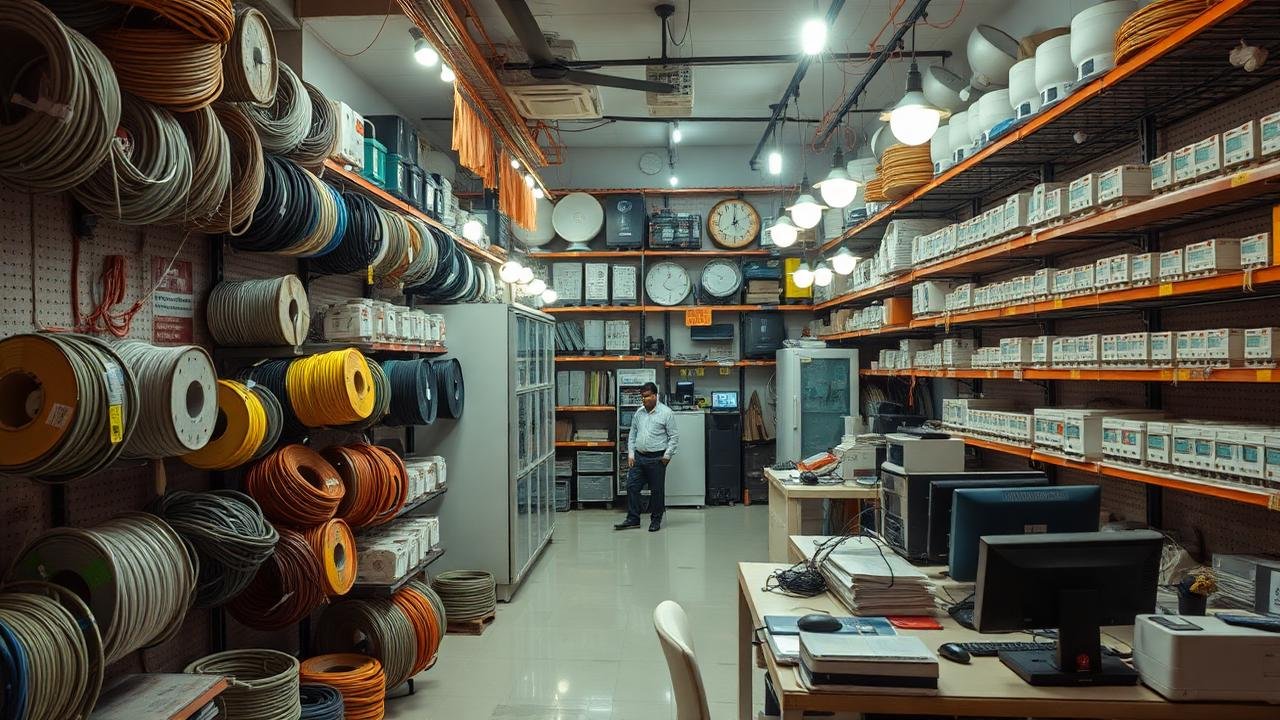
Where you run a godown plus a counter, both are separate stock locations with transfer vouchers so billing reflects what is physically at the counter.
- Slow, non-moving and dead stock by brand and model
- Reorder levels and supplier-wise shortage reports
- Rack-wise physical verification with variance posting
- Counter and godown as separate stock locations
Workshop and job card use
Where you also run a workshop, parts issued to a job can be tracked against the vehicle and the customer, with labour charges added, so the final invoice carries parts and service together with the right GST treatment on each.
Vehicle history — what was fitted, when, at what reading — becomes searchable, which supports both service reminders and warranty conversations.
GST for auto parts
Parts largely sit at a single higher GST rate, but oils, batteries, accessories and services can differ, so item-level HSN mapping matters. We configure the cases you actually deal in and test them on live documents.
E-invoice and e-way bill generate from the invoice, and GSTR-1, 3B and 2A/2B reconciliation run from the books, which protects credit across a large number of supplier bills.
Implementation for an auto parts business
The part master is the project. We clean and import your catalogue with codes, aliases, model mapping, brand, MRP, HSN and rack locations, because a parts system without alias search is a parts system nobody uses.
Then opening stock is taken rack by rack, rate and discount structures are configured, credit rules are applied, print formats are designed, and counter staff are trained on search first and billing second. Support afterwards is by phone, remote and on site around Pune.
Auto parts counter needs and Busy handling| Need | Busy handling | Result |
|---|
| Customer quotes an OEM number | Unlimited aliases per part | Found in one search |
| Part must fit a specific model | Make, model and variant mapping | Wrong-fit sales avoided |
| Different rates for garages | Party-wise discount on MRP | Correct rate without negotiation |
| Warranty return | Serial or batch with sale history | Verified in seconds |
| Capital stuck in slow lines | Dead stock by brand and model | Buying corrected next cycle |